
Europe needs to raise investment in workers and companies through a real industrial policy – not lower standards, the General Secretary of the European Trade Union Confederation (ETUC) told political and industry leaders today.
Speaking at the European Industry Summit in Antwerp, Esther Lynch said workers facing a wave of redundancies know better than anyone that Europe’s economy needs to become more competitive. But she said that deregulation is not the answer:
“Europe is facing a real competitiveness challenge. Pressure on our industrial base is already resulting in job losses across manufacturing regions, and that pressure is spreading into other sectors too. But a genuine problem does not justify the wrong response.
“European competitiveness will not be rebuilt through deregulation, or by weakening workers’ rights and protections, by cutting pay, forcing longer hours, or making work more insecure. That path creates a race to the bottom. Europe will not win by lowering the bar.”
Echoing these concerns, industriAll Europe’s President Michael Vassiliadis warned that Europe risks losing workers’ support for the green transition if urgent action is not taken.
“European trade unions have always supported the objectives Europe has set itself to become an innovative, growing and green continent — reducing Europe’s dependencies and building a low-carbon economy is a responsibility in the ecological dimension, but also in the sense of a new European security and resilience architecture.
“But let us be honest: the conditions for workers to believe in this transition as a path to a good future for themselves and their children are currently under pressure. And unless we correct this, the entire project is at risk.
“The gap between the EU’s political narrative and the reality of workers is widening. Workers see closures, uncertainty and jobs at risk. If policymakers fail to address these issues, worker anxiety will grow — and with it support for forces that question the European project itself.
“We want Europe to succeed. We need a proactive industrial policy, action on energy and carbon prices, and just transition.”
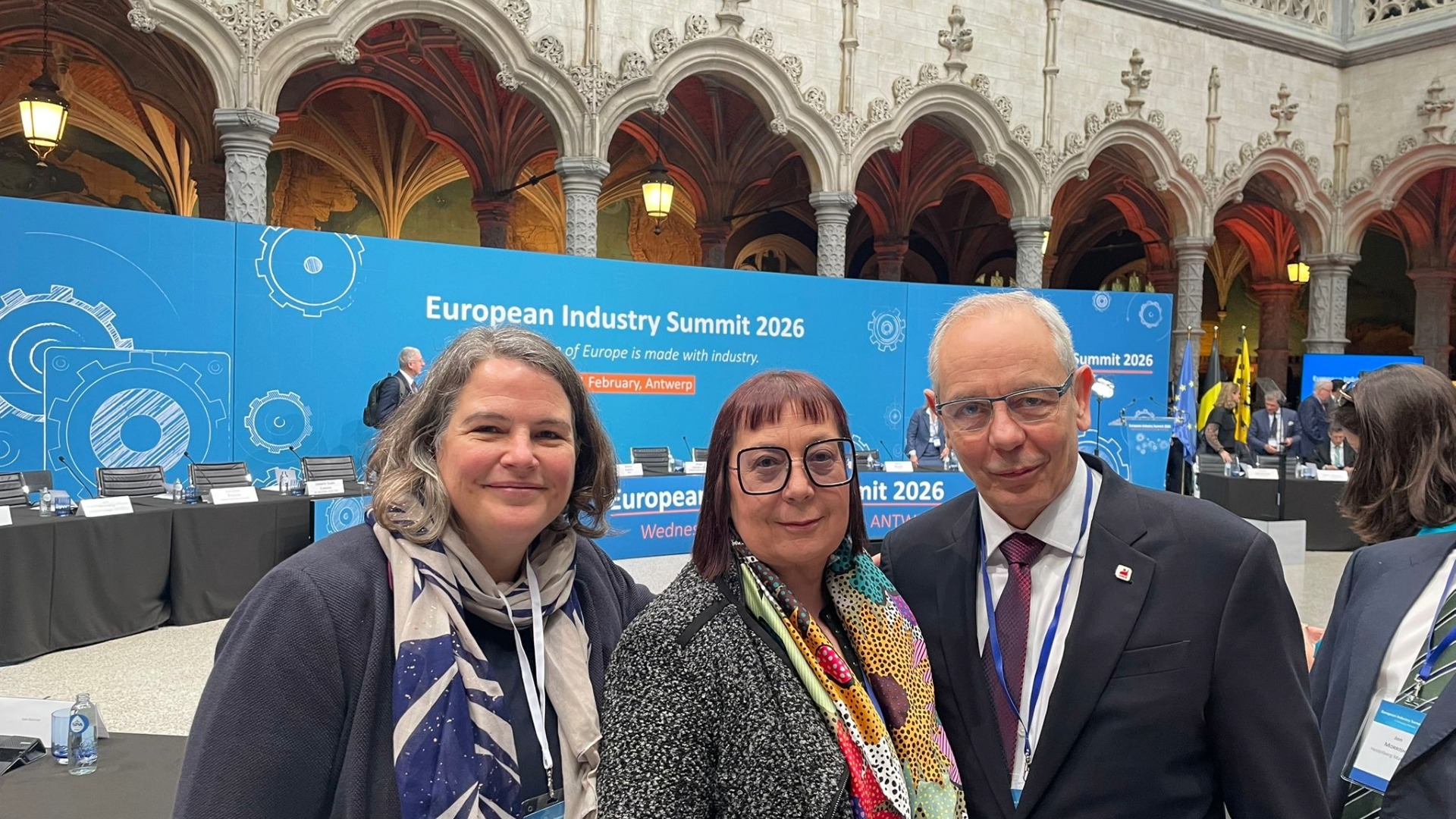
The ETUC is calling for an industrial policy that creates a more competitive economy through the investment needed to increase productivity, internal demand and investment in our workforce.
Investment has fallen in recent years, despite the fact profits have risen. The situation risks being made worse if the EU does not replace the Next Generation EU scheme ending this year. Investment in better quality jobs is also needed to end the labour shortage, exacerbated by unattractive low pay and conditions, and the skills shortage caused by low training rates. Working people are also the motor of internal demand and wage increases are key - when working people have money in their pocket, they don't siphon it away to offshore bank accounts, but spend it here in Europe.
“We need a mission-driven European industrial policy,” added Lynch, “to make Europe competitive by investing to create and sustain production here, managing the green and digital transitions in a way that protects jobs and strengthens industry, coping with geopolitical turbulence, ensuring a level playing field in trade, so that European industry is not undercut by unfair competition, and closing strategic vulnerabilities. Europe needs foresight and a plan, not to fall behind and then try to catch up.
“And if that industrial policy is to succeed, it must be built on quality jobs. Quality jobs are not a cost. They are a driver of productivity, innovation and resilience. Without fair pay, training, security and collective bargaining, there is no sustainable competitiveness. Europe faces a defining choice: to chase competitiveness by cutting protections and driving a race to the bottom, or to build a stronger Europe by investing in European industry, managing transformations in a fair and orderly way, and creating quality jobs.”
